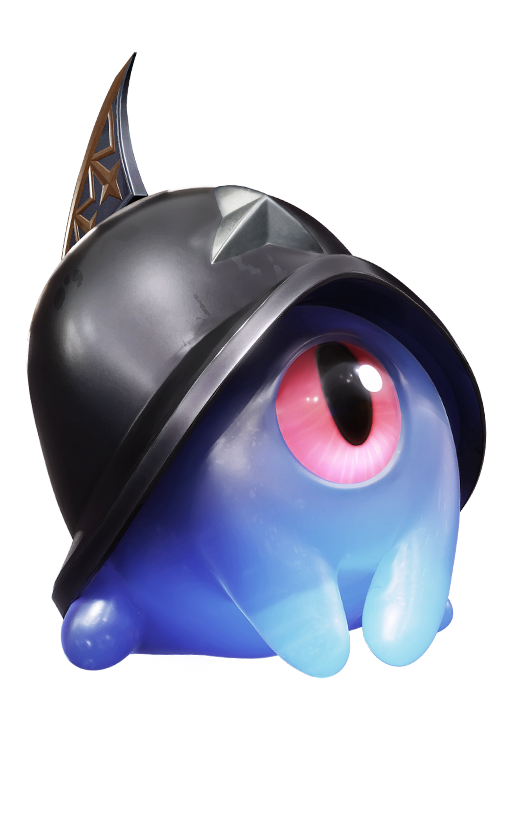
Twine lets a Pathfinder take a collected Aniimo’s form and use its abilities. Choose by the ability needed for the obstacle: an element or combat-role badge alone does not tell you how a creature moves or interacts with the environment.
In this guide
Read the movement entry before choosing a form
The fastest way to turn Twine into a useful decision is to name the obstacle first. Are you trying to cover ground, investigate something hidden, or interact with a particular part of the landscape? Then look for text that addresses that problem directly.
The official Index gives three helpful contrasts. Emberpup has a stamina-consuming speed ability. Helmut has a detection ability associated with nearby metal objects and concealed Aniimo. Iris has a flower-producing movement entry. These descriptions are not interchangeable even though all three are part of the same companion system.
| Creature / mobility entry | Documented effect | Editorial use |
|---|---|---|
| Emberpup · Hustle | Faster movement while consuming stamina | Think about how far you need to travel, not only top speed. |
| Helmut · Detection | Reveals nearby metal and concealed Aniimo | Investigate when visibility is the problem. |
| Iris · Blooming | Flowers appear where it dances | Inspect the field interaction; do not assume a harvesting bonus. |
References: Official Index · emberpupOfficial Index · helmutOfficial Index · iris
Movement convenience can have a resource cost
For an ability such as Hustle, the useful comparison is the entire journey: distance covered, resource consumed and what you need to do when you arrive. A shorter travel time is not automatically the best outcome if it leaves you unable to perform the next action. Test the specific situation rather than treating a movement skill as a permanent speed increase.
Keep the input instructions and availability shown by your current client close at hand. A guide to Twine’s purpose cannot substitute for the tutorial’s current controls or unlock conditions. Our creature pages link directly to the selected official form so you can check whether a detail has changed.
References: Official Index · emberpup
Combat and exploration use the same careful reading habit
A combat skill can describe a dash, an area attack or an aimable projectile. Do not convert that automatically into a traversal claim: an attack moving toward a target is not proof that it crosses every gap. Conversely, a field ability should not be evaluated only by attack numbers.
Use two questions when inspecting a companion: ‘What does the text say it does?’ and ‘What do I need it to do here?’ If the answers do not match, choose a different tool or test the uncertainty in a low-cost situation. The exploration ability checklist turns this into a reusable decision table.
Common questions
Can every Water Aniimo dive?
Do not infer that from the Water label. Read the individual ability and the current in-game controls; elements describe a different part of the record.
Is a combat dash a confirmed exploration shortcut?
Only when its actual behavior supports that use. Target requirements, terrain and the current client can matter, so the attack description alone is insufficient.
Sources & reference notes
Reviewed 2026-09-14. These references describe the scope of this record; details can change.
- Steam · storefront and system requirements
- Official Index · emberpup
- Official Index · helmut
- Official Index · iris